Any MCP server, any host
stretto-proxy takes the server's place in your host's configuration, and runs it as a command or reaches it over Streamable HTTP. It forwards every message and records each session.
Integrations
stretto learns, from your agent's recorded tool calls, which reads come next and where their arguments come from. An MCP proxy then makes those reads for it, in the same tool result.


stretto sits where MCP already puts a server. It records what your agent does, learns which reads follow which calls, and serves those reads behind the agent's own calls.
stretto init --host cursor --domain orders -- <server>stretto learn --sessions ~/.stretto/logs/orders --habit-only …stretto flow-show orders.flow.jsonstretto init --host cursor --flow orders.flow.json -- <server>The agent searches a folder of notes for the October meetings. The flow reads both meetings behind that one call, and the agent gets its own result with one more text item:
--- Also looked up automatically (current results; no need to repeat these calls) ---

read_text_file {"path":"/home/me/notes/meetings/2026-10-06.md"}:
# 2026-10-06
Gamma design review moved to 10-09.


read_text_file {"path":"/home/me/notes/meetings/2026-10-13.md"}:
# 2026-10-13
Delta owner: Priya.
The agent made 1 call where it had made 3. The walkthrough runs this loop end to end on the official MCP filesystem server, with no key.
The console is a web app on your machine, over the files stretto writes. It shows each session as a timeline, with the reads stretto made after each call and why, and each flow as a graph you can try at another threshold. It also has your servers with their host configuration, and the CLI's jobs, run from the page.
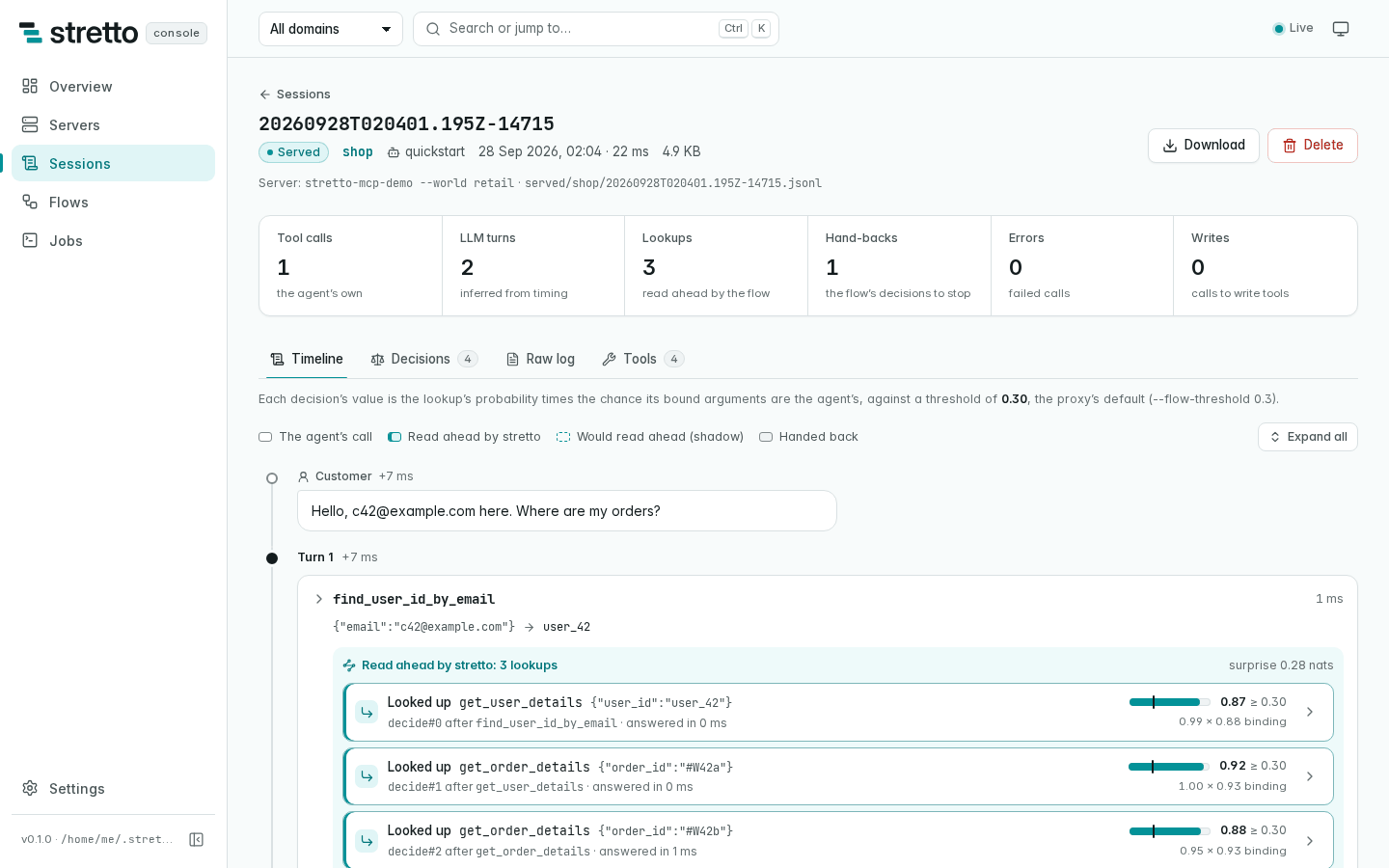
The console's guide shows how to run it, from a checkout or in a container.
Every number comes with the kind of evidence behind it, and the script that recomputes it.
Read why stretto for where these come from and what they do not show, or the paper for the model behind them.